
Compression recovery products are beneficial but inconvenient. Athletes slip their legs into bulky pneumatic boots, lie down for 30 minutes, and wait. That technology works: improved blood flow, reduced soreness, and faster muscle recovery. But the cost is immobility and wasted time. For someone juggling training, work, and life, that's a friction point big enough to skip recovery altogether.
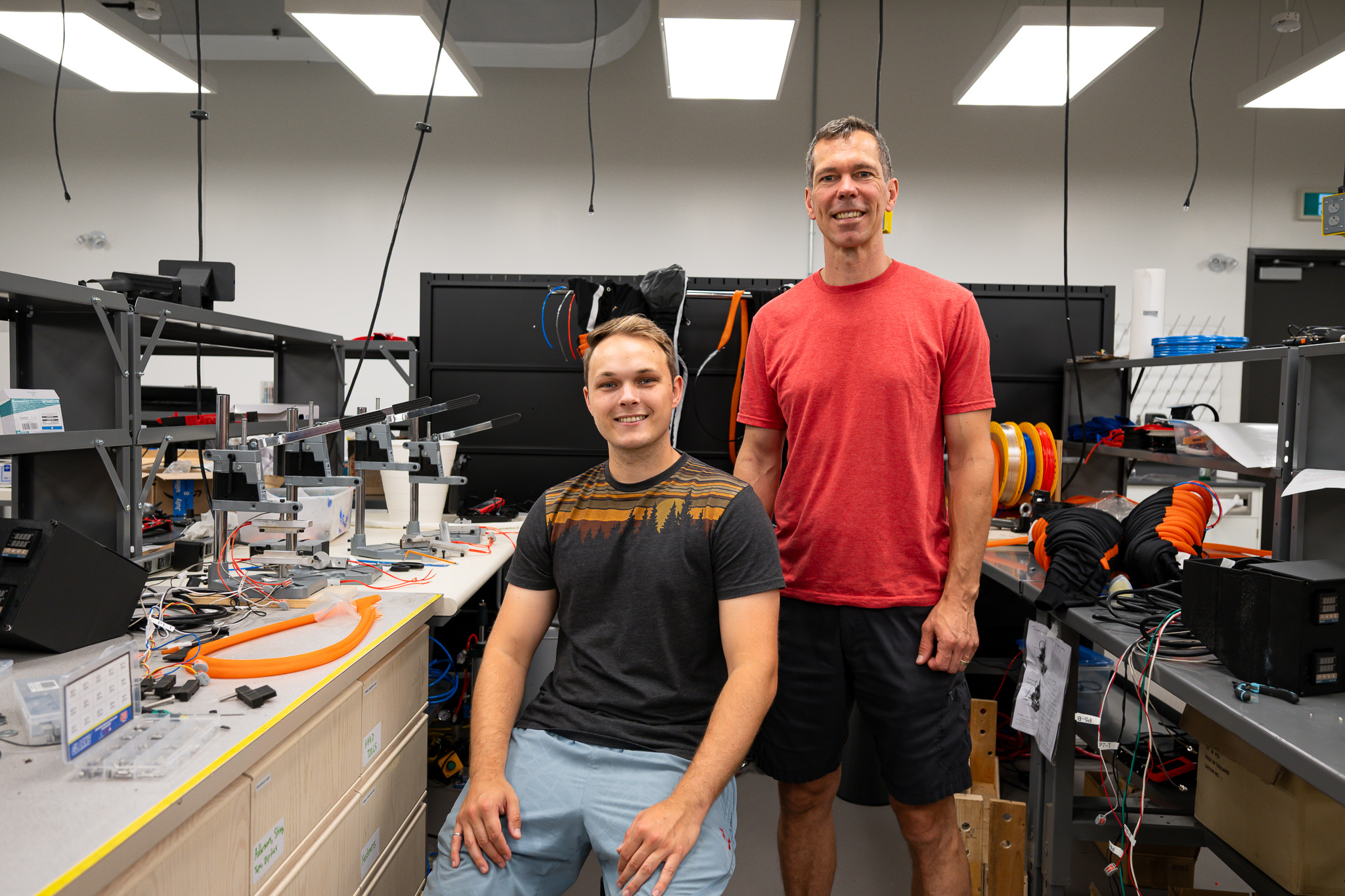
Jordan Savage (BASc '22, MASc '24) encountered that problem as a Waterloo graduate student studying soft robotics and microfluidics. He and co-founder Caleb Horst (BASc '02, MASc '04) recognized an opportunity to reimagine the entire category, founding Strivonix to prove that compression therapy could be wearable, mobile, and built for real life.
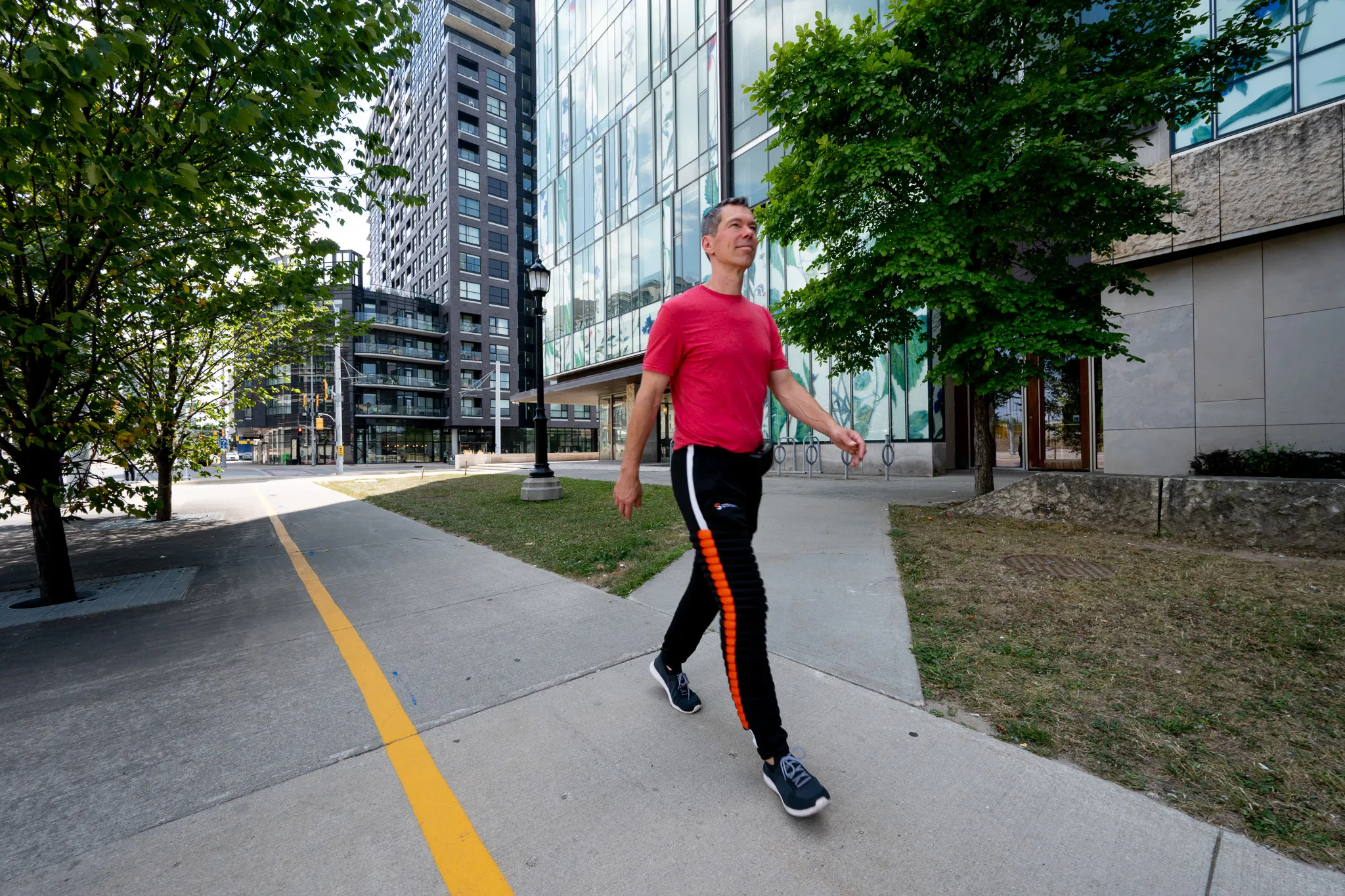
The insight was deceptively simple: replace the air bladders in traditional boots with air muscles, tubular structures that contract when pressurized and behave like flexible springs. Wrap a 40-foot segmented air muscle helically around the leg, and suddenly compression becomes something you can do while sitting at your desk, standing in the kitchen, or moving through your day.
"The core innovation, using air muscles for limb compression, had never been done before," Horst explains. "While early prototypes proved the idea in a lab, scaling it into a manufacturable product was the real challenge."
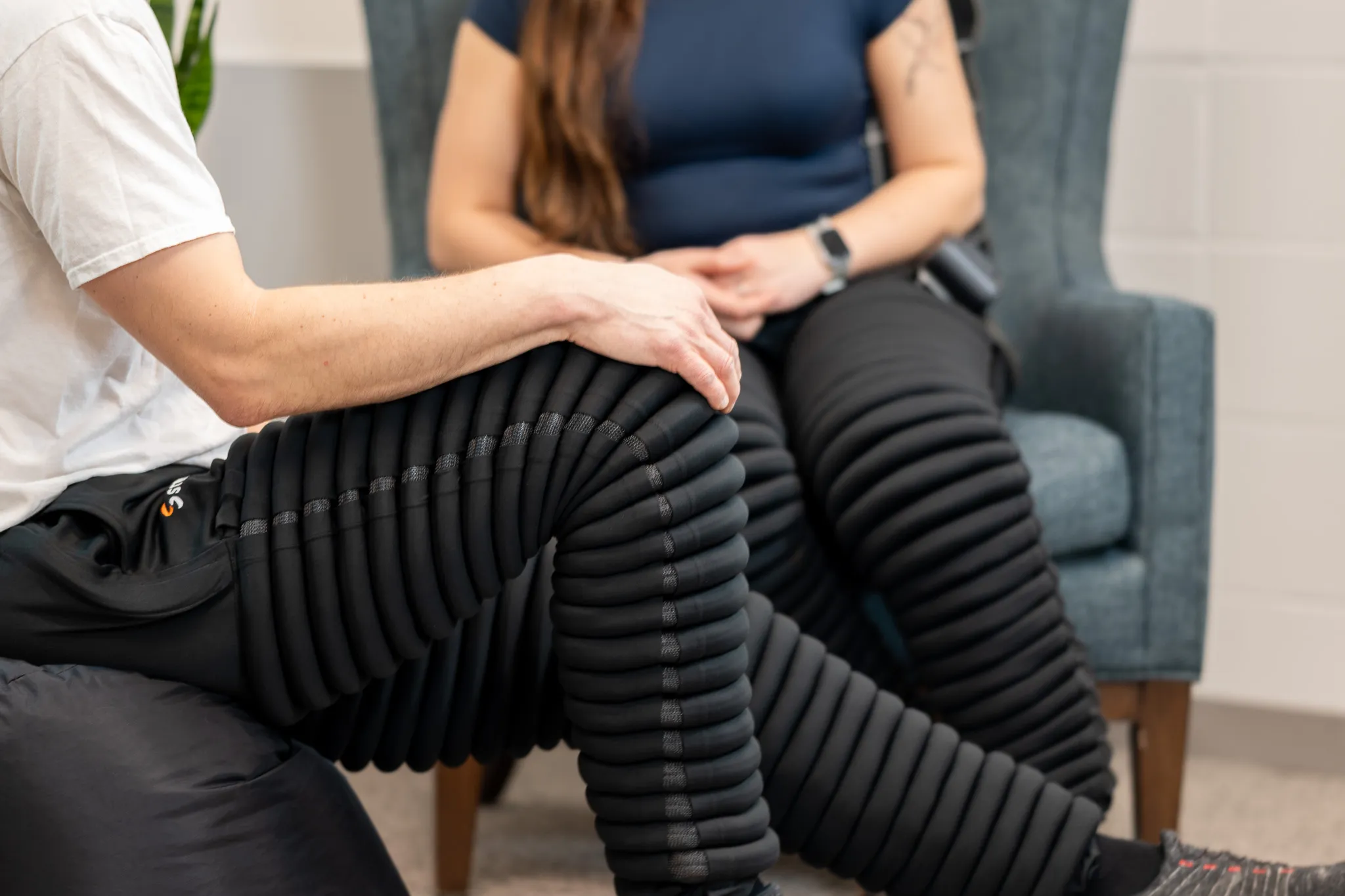
That challenge exposed a hard truth: breakthrough materials don't fit neatly into established supply chains. Soft robotics, garment manufacturing, adhesives, thermal bonding, advanced weaving, Strivonix had to stitch together expertise across industries that rarely talk to each other. Components like the woven tube at the heart of the air muscle, originally designed as cable sleeves, needed complete customization: different materials, diameter, structural properties. There was no off-the-shelf path to scale.
Rather than compromise on performance, the founders built their own. Velocity's support through lab space, mentorship, and access to the University's IP and commercialization network via WatCo gave the team room to solve manufacturing problems without pressure to launch prematurely. It allowed them to establish international partnerships and plan final assembly in Kitchener, creating a Canadian product with global reach.
"We didn't fit neatly into any existing supply chain," Horst reflects. "The biggest challenge wasn't proving the concept, it was making it manufacturable at scale."
That work is paying off. Strivonix is now in its first production run, with consumer sales beginning within weeks. The initial sales focus is athletes and active people. But the founders see a larger horizon: clinical applications for circulatory and lymphatic conditions, where adaptive, intermittent compression recovery becomes an easy-to-wear item that can be incorporated into other parts of the day.